
PARTICIPATIONs:
SESSION NO.: 2, DATE: November 12, 2026 Thursday (First Day) , TIME: Afternoon Session
SESSION THEME: “Current Trends in Peri-implant Diseases Management”
Special Session for the SEPA – Spanish Society of Periodontology
Presentation Title: “Primordial and Primary Prevention of Peri-Implant Diseases: From Risk Assessment to Long-Term Stability”
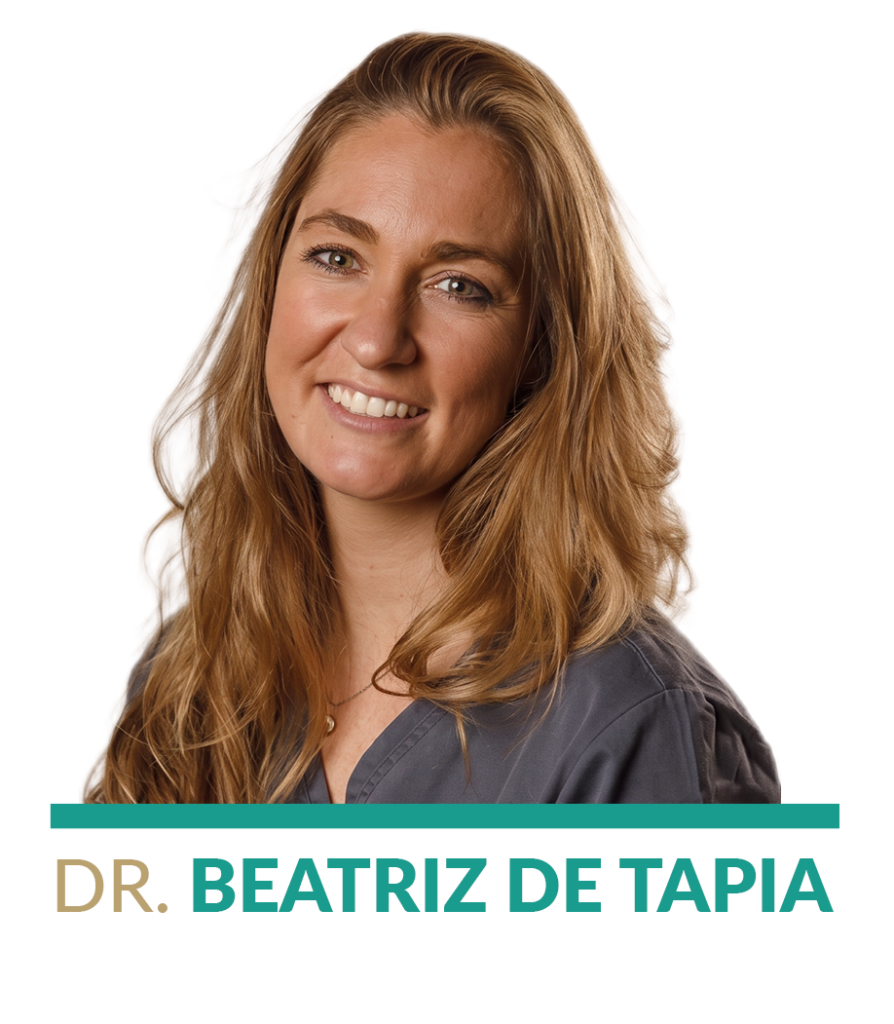
DR. BEATRIZ DE TAPIA
- Associate professor in Universitat Internacional de Catalunya, undergraduate and Master in Periodontology students. Supervisor of several research projects and doctoral thesis.
- Spanish Europerio Ambassador.
- Member of the Spanish investigation group “Prevention and treatment of peri-implantitis” (PTPO).
- Board member of the Spanish Society of Periodontology (SEPA).
- Scientific Committee SEPA Next Generation .
- Coordinator of the modular course: Advanced mucogingival surgery on teeth and implants, Universidad Complutense de Madrid.
- Coordinator of the course: Diagnosis and treatment of peri-implant lesions. Universitat Internacional de Catalunya
- Editorial board of Journal of Periodontal Research.
- External reviewer for different periodontal and implantology journals.
- National and international speaker in the field of periodontics and peri-implant diseases.
- Private practice exclusive dedicated to periodontology, oral surgery and implantology in Barcelona and Madrid, Spain.
Lecture Abstract:
Peri-implant diseases are a frequent challenge in daily clinical practice. Since the predictability and long-term stability of their treatment are still under debate, prevention should remain the cornerstone of our therapeutic approach. In this context, prevention must begin even before implant placement, through careful control of patient-related risk factors and a comprehensive treatment planning strategy.
For this reason, surgical and prosthetic decision-making plays a key role in what we could call a “primordial prevention” approach to peri-implant diseases. Every step matters: from flap design and tissue management to the selection of the surgical approach and implant characteristics. Equally important is a prosthetically driven implant placement that allows for an adequate three dimensional position of the implant and, consequently, a restoration design that facilitates hygiene access and long-term maintenance.
In addition, aspects such as prosthetic emergence profile, prosthesis design, and the fit and seating of the restoration may significantly influence peri-implant tissue stability over time. This session will discuss how many of the biological complications we face today may actually originate from decisions made long before peri-implantitis develops.
Industry Partner