
PARTICIPATIONs:
SESSION NO.: 3, DATE: November 13, 2026, Friday (2nd Day), TIME: Morning Session
SESSION THEME: “Less is More: The Italian Society of Periodontology (SIdP)’s Journey Towards Periodontal Tissue Regeneration” – Special Session for the SIdP – Italian Society of Periodontology and Implantology
Presentation Title: “To Graft or Not to Graft? Simplifying Biomaterial Selection by Enhancing Biological Potential”
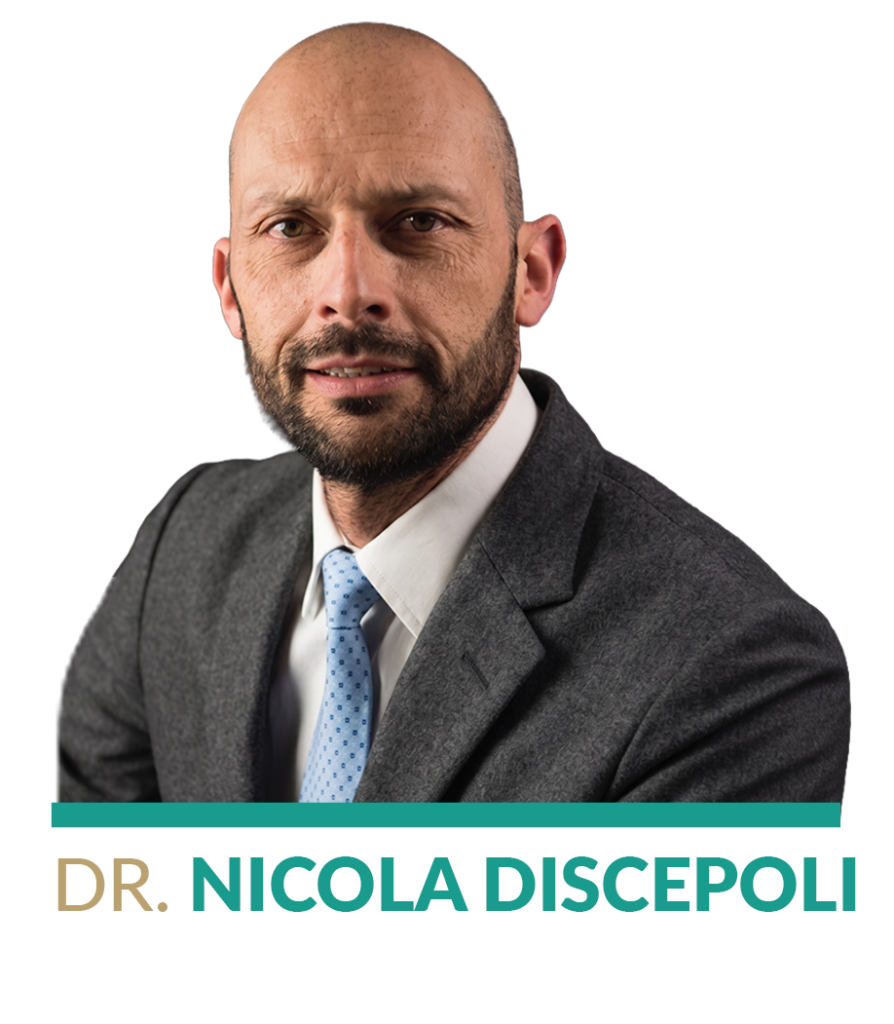
DR. NICOLA DISCEPOLI
- Graduated in Dentistry and Dental Prosthetics in 2003 from the University of Siena, with highest honours.
- Obtained the Board certification of the European Federation of Periodontology (EFP) in 2011. In the same year, he was awarded an M.Sc. in Periodontology and Implantology (European Federation of Periodontology Certificate) from the Complutense University of Madrid (Madrid, Spain).
- In 2016, he obtained a Ph.D. from the Complutense University of Madrid (Madrid, Spain).
- In 2020, he was awarded an M.Sc. in Research Methodology in Biomedical Sciences from the Autonomous University of Barcelona.
- Holds the position of Professor of Periodontology at the Department of Medical Biotechnologies, University of Siena.
- Coordinates the Periodontology Unit and directs the second-level residential Master’s programme in Clinical Periodontology.
- An active member and board of the Italian Society of Periodontology and Implantology (SIdP).
Lecture Abstract:
Regenerative periodontal surgery relies on the interplay between wound stabilization, space maintenance, and biological signaling. The expanding array of available biomaterials — including bone substitutes, barrier membranes, and biologically active agents — has paradoxically complicated clinical decision-making. This review proposes a simplified, biologically driven framework for biomaterial selection, shifting focus from material-centric protocols to the enhancement of the regenerative microenvironment. By prioritizing angiogenesis, clot stability, and cell recruitment over graft volume alone, clinicians can rationalize indications for grafting versus non-grafting approaches. Evidence-based criteria are discussed to guide site-specific decisions, ultimately improving predictability while reducing procedural complexity in everyday clinical practice.
Industry Partner